
Strange Sounds From Your AC: What They Usually Mean in Plano
If your central air conditioning is making unusual noises, you want answers you can use right away. This guide helps you identify common sound patterns, check the most likely causes, and decide when to call for air conditioning repair in Plano, TX. It also covers what to document so technicians can diagnose faster.
Your AC runs, but lately it sounds “off.” Maybe it’s a rattling noise when the outdoor unit kicks on, a squeal coming from the indoor blower, or a clicking sound that starts and stops with the thermostat. In Plano, TX, those noises can show up when humidity is high and temperatures stay warm, so the system tends to run longer than it does in cooler seasons.
Before you shut the system off and hope it fixes itself, you can do a few safe checks. This article will help you sort out what the sound might be, what you can verify at home, and what information to gather for reliable AC repair.
- Quick answer
- What to check first
- Main things customers should understand
- Why this matters in Plano, TX
- Common mistakes to avoid
- Customer checklist
- Frequently asked questions

Quick Answer
If your AC is making strange sounds, start by checking the thermostat settings and the return air filter condition, then listen for where the noise comes from (indoor blower vs. outdoor unit). Rattling, grinding, repeated clicking, or loud squealing are signals to stop troubleshooting and schedule AC repair. For most homeowners, the practical next step is to contact a licensed HVAC professional to inspect the system, confirm the noise source, and check key components like the blower, fan, and electrical connections. Efficient Home Solutions Plano can help you narrow down the cause and plan the right central air conditioning repair.
What to Check First
Before calling for air conditioning service, you can safely narrow down the problem. Start with simple, non-invasive checks: verify the thermostat is set to cool and the fan setting matches your expectation, then locate your return air filter and check whether it is clogged or installed backward. A restricted filter can increase blower strain and contribute to noise or airflow problems. Next, watch the system start-up cycle and note exactly when the sound happens: immediately at start, after a few minutes, or only when the compressor engages outdoors.
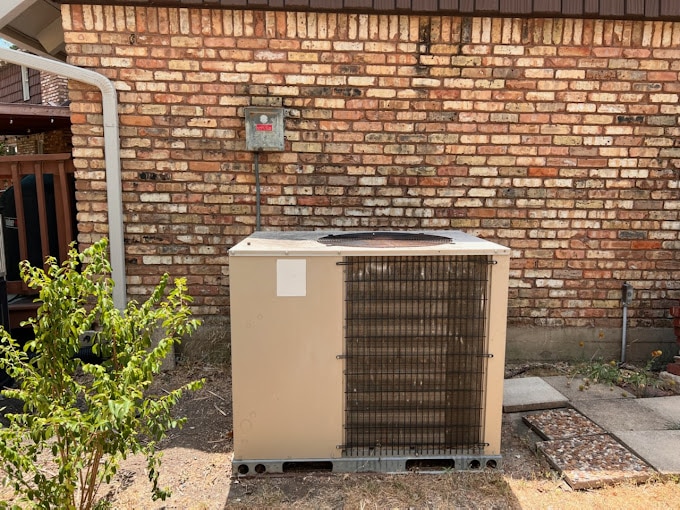
Professional observation: Many “mystery noises” turn out to be a specific component working outside its normal range. When you can tell whether the sound is from the indoor air handler or the outdoor condenser, technicians can focus the inspection and reduce guesswork.
As you listen, try to categorize the sound. Is it a rattle (loose parts or panel contact), a squeal (belt or motor-related friction, depending on system design), a grind (bearing or fan issues), or clicking (electrical control or contact points timing)? If the noise is accompanied by burning smells, sparks, or repeated trips of the system, turn the unit off and call for help.
Where the noise is coming from
Indoor: usually blower, fan, or airflow path.
Outdoor: often fan, compressor contact timing, or debris contact.
When the sound shows up
At start: fan contact, electrical engagement, airflow restrictions.
After minutes: moving parts loading up, airflow imbalance.
What else you notice
Check for weak airflow, uneven cooling, unusual odors, or the system shutting off early.
Main Things Customers Should Understand
Strange sounds are usually a symptom, not the root cause. The cause could be mechanical, airflow-related, or electrical. In residential HVAC systems, airflow restrictions often show up as noise plus weaker cooling, while loose panels or debris can produce rattling that gets worse as vibrations increase. Electrical clicking can be normal during certain control cycles, but repeated clicking with poor cooling can mean a component is not engaging correctly.
To help you make a smart decision, here is a practical “sound to next step” guide. Use it to decide whether you can continue light checks or you should schedule a professional inspection for AC repair near me.
| Sound pattern | Common home observations | Good next step |
|---|---|---|
| Rattling or vibrating | Worse when the system runs longer; may sound like loose metal | Check for airflow restrictions first, then schedule inspection if it continues |
| Squealing | High-pitched noise from the indoor unit or blower area | Stop extended troubleshooting and request air conditioning repair to inspect moving parts |
| Grinding | Low, heavy sound that may worsen quickly | Turn the system off and call for service; grinding can indicate serious mechanical wear |
| Repeated clicking | Clicking starts with cooling call; cooling is weak or inconsistent | Document how often it clicks and request inspection of control/electrical components |
| Banging or thumping | Sudden loud impact noises | Schedule inspection promptly to prevent damage to fans and mounts |
What to document before the technician arrives:
- The exact time the noise started (or what changed before it began).
- Whether the sound is from the indoor air handler, the outdoor condenser, or both.
- Whether cooling is weak, uneven, or the system cycles off early.
- Any error codes shown on the thermostat or indoor unit.
Why this matters in Plano, TX
In Plano, TX, summer conditions can keep air conditioners running steadily, especially when indoor humidity is high. Longer run times can make small issues louder and more obvious. For example, a partially restricted airflow path can increase blower load, and outdoor fan or condenser areas can pick up debris over time. When the system works harder, the sound you hear at the start of the cooling cycle may become more frequent or more intense.
If your home also has insulation and ventilation issues, it can affect how hard the AC has to run. Home ventilation and insulation upgrades can help the system maintain comfort more consistently. If you suspect the temperature swings or humidity feels “off,” consider reviewing related options like attic insulation and attic ventilation.
Common Mistakes to Avoid
Homeowners often try fixes that are either unsafe or don’t address the real cause. One common mistake is repeatedly turning the thermostat on and off to “test” the sound. That can increase electrical stress and make the system cycle in a way that hides the underlying issue. Another mistake is running the AC with a clearly clogged filter, which can worsen airflow and contribute to blower strain and noise.
Here are a few more pitfalls we see around residential air conditioning service:
Common mistakes:
- Assuming all clicking is normal without checking cooling performance.
- Ignoring grinding or loud squealing because “it still cools.”
- Changing thermostat settings but never checking the filter or airflow.
- Covering or blocking vents to “quiet” rattling.
- Trying to tighten cabinet panels or components without knowing the cause.
Customer Checklist
Use this checklist before you call for AC service. It helps Efficient Home Solutions Plano diagnose the issue faster and choose the right central air conditioning repair approach.
- Confirm thermostat is set to cool and fan setting matches your system behavior.
- Inspect the return air filter and note whether it is clogged or improperly installed.
- Listen to identify whether the noise is coming from the indoor unit, outdoor unit, or both.
- Record when the noise happens: at start-up, after a few minutes, or during cycling.
- Note whether cooling is weak, uneven, or the system shuts off early.
- Write down any error codes or unusual smells (especially burning or electrical odors).
Representative Scenario
A Plano homeowner noticed a persistent rattling sound every time the outdoor unit started. Cooling was weaker than usual, and the noise seemed to get louder after the system ran for several minutes. After checking the thermostat settings and confirming the filter was not obstructed, the homeowner still could not identify the source. Efficient Home Solutions Plano inspected the system and focused on the components tied to outdoor fan operation and airflow balance, then recommended the appropriate central air conditioning repair based on what was found during the inspection.
Get Clear Guidance for Your AC’s Strange Sounds
Tell us what you hear, where you hear it, and when it happens. We can help you move from “guessing” to a real diagnosis for AC repair in Plano, TX.
Request AC Repair HelpFrequently Asked Questions
Is it safe to keep running my AC if it’s making strange sounds?
If the noise is mild and intermittent, you can do basic checks like verifying the thermostat settings and inspecting the filter. However, if you hear grinding, loud squealing, repeated heavy thumps, burning smells, or signs of electrical problems, it’s safer to stop running the system and schedule AC repair. Strange sounds can indicate issues with moving parts, airflow imbalance, or electrical control components, and continued operation can sometimes worsen damage.
What does clicking from the AC usually mean?
Clicking can happen as the thermostat and controls cycle, but repeated clicking paired with weak cooling is a clue that something is not engaging as it should. It may involve the way the system calls for cooling, control timing, or an electrical contact that is not operating smoothly. The most helpful step is to note when the clicking happens (at start-up vs. after running) and whether the system cools normally. That information helps technicians target the correct part during air conditioning repair.
Can a dirty filter cause my AC to make noise?
Yes. A clogged filter can restrict airflow, which forces the blower to work harder. That added strain can contribute to noise, reduce cooling performance, and increase the likelihood of the system cycling more frequently. Before calling for service, check whether your filter is clogged or installed incorrectly. If the filter looks clean and the noise persists, the sound is likely tied to other components such as the blower, fan, or outdoor unit operation, and professional inspection is the best next step.
Should I focus on the indoor unit or the outdoor unit?
Start with location. If the sound is clearly coming from the indoor air handler or return area, focus your attention there. If it’s louder outside when the system starts, the outdoor condenser or outdoor fan may be the source. Many issues involve one system area more than the other, and identifying the source helps avoid unnecessary troubleshooting. If you cannot tell, make note of whether the sound changes when the compressor starts outdoors. That’s valuable for central air conditioning repair diagnosis.
Can ventilation or insulation problems make AC noises worse?
They can indirectly. Poor home insulation or ventilation can make your HVAC system work harder to maintain comfort, especially in warm, humid stretches. When the system runs longer, issues that were “quiet” at first can become more noticeable. If you’re also seeing humidity problems, temperature swings, or rooms that feel inconsistent, it may be worth exploring related solutions like attic insulation and attic ventilation alongside AC diagnostics.
Ready for Professional AC Repair in Plano?
If your AC sounds strange, you do not have to guess. Efficient Home Solutions Plano can inspect your system, identify the noise source, and recommend the right next steps for air conditioning service in Plano, TX and surrounding areas.
(972) 235-2600
Efficient Home Solutions Plano
Efficient Home Solutions Plano provides HVAC services for homeowners and businesses across Plano, TX and nearby areas. If you’re searching for air conditioning service near me because your system is making unusual sounds, our team focuses on practical diagnostics and clear recommendations for AC repair. Explore our indoor air quality solutions when comfort issues go beyond temperature.